


How Does IHC Differ From IFS?

IFS is the leading trauma-informed therapy model, focused on helping clients with inner healing by means of working with the Survivor's inner parts, toward the goal of integrating the parts into the core self. IHC, on the other hand, does not set integration as a goal, given it does not believe that integration is the goal of therapy, as it is neither achievable or possible.
IFS is a secular model, thus does not take into account the reality of the demonic realm that SRA (and often MK Ultra) Survivors have been subjected to during the incidents of abuse, which inevitably took the form of rituals and ceremonies, and involved aspects of dark occult ritual magic, which would often involve being gang raped while enduring torture involving blood, and even dismemberment of animals or other victims.
Demonic entities would inevitably be "called" or conjured during such occultic rituals, leaving the Survivors with an additional level of trauma and confusion that is, by nature, spiritual. Given the Biblically-informed understanding of IHC regarding such experiences as demonic appearances, and the questions that result pertaining to demonic oppression and possession, curses and "spiritual contracts", bloodlines and generational curses, and the subject of whether deliverance is needed, IFS is simply not designed or intended to address such spiritual and theologically-foundational matters.
What Are The Similarities Between IHC & IFS?
Both IHC & IFS are trauma-informed models of therapy, which take into account the physical and psychological impact of profound and/or prolonged overwhelming events, which have created not only complex post-traumatic stress disorder (CPTSD), but also dissociation, leaving the Survivor with gaps in their active recollection of events (amnesia), all while their body feels the impact in terms of the autonomic nervous system's "stuck" hyperarousal state. In young children, when faced with such overwhelming situations (especially when it takes the form of profound and prolonged sadistic sexual abuse), they will experience an internal "stepping away on the inside" from the horror of the event or incident, thus involuntarily experiencing a segmenting of their personality.

With continued and repeated exposure to such trauma, that internal experience will often be replicated internally, as one protective parts steps in for another when the internal stress becomes even too much for the original part that stepped in as the primary conscious part of the young victim stepped back or "went away." Thus, it is not uncommon for Survivors of such horrific sadistic sexual crimes to have experienced multiple "splits", which remain with the Survivor.
IHC Internal Map
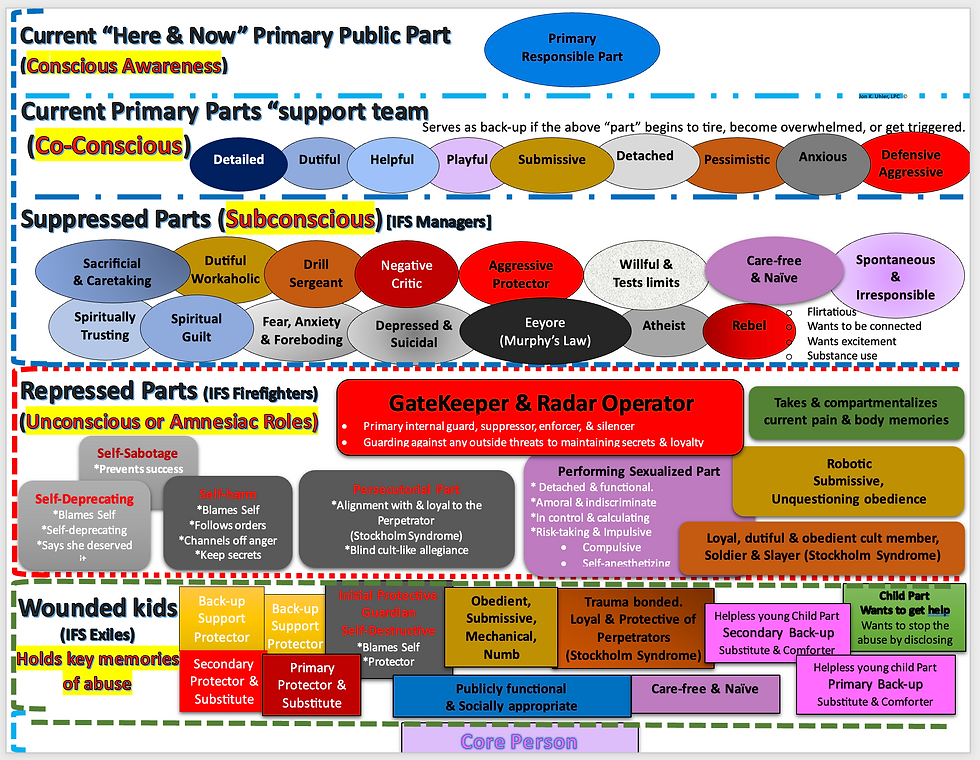
Both IHC and IFS seek to help trauma survivors understand their current experiences if the survivor begins to recognize the telltale indicators of such internal parts. Both models view a Survivor's internal world in terms of levels of awareness and functional purposes of the various categories of parts, and the need for the parts to begin working together cooperatively to ensure the past trauma can be processed, while working toward internal harmony of all the parts.
The primary or conscious part of the Survivor lacks the conscious recollection (ie. childhood amnesia) of the events that caused the splitting, but their bodies, mind, and emotions reflect the trauma in a myriad of ways and indicators.

IHC
A Transformative Trauma-informed Therapy Model for
Dissociative Identity Disorder

The Internal Healing and Collaboration is a new clinical therapy model designed to help the Survivors of significant sadistic sexual abuse (especially those who've suffered SRA (Satanic Ritual Abuse) and MK Ultra criminal level of abuse), beyond the limits of other models of trauma-informed treatment, including Internal Family Systems (IFS).
Based upon the combined 35 years of professional clinical work in some of the most intensive of settings, with some of the most damaged of clinical populations, and the personal healing journey of a Survivor of profound sadistic ritualistic sexual abuse (both SRA and MK Ultra), IHC offers both Survivors and clinicians a unique framework with which to understand the nature of the harm perpetrated by such profound abuse, it's impact upon the inner world of the victims, unique insights to help with properly understanding the Survivor's inside system, the unique inner dynamics, struggles, and challenges to the process of healing for those who've been subjected to SRA and MK Ultra, and effective methods and interventions that can be implemented to help move the person and the process of healing forward toward the ultimate goal of internal collaboration and cooperation among the parts within the system
There are a number of important similarities between IHC and IFS, which is why the founders of IHC, Jon K. Uhler, LPC & Survivor, Diana W., continue to recommend that Survivors take the time to acquaint themselves with IFS, as it is extremely well researched, has tremendously well-educated leaders in the field of trauma therapy involved in the model, and can provide additional helpful insights into working with inner parts. However, there are some additional foundational differences between the two models, especially as it comes to the utilization of Eastern Meditation, the recommendation of EMDR, hypnosis, and guided imagery as effective tools and interventions for working with this level of trauma, and the embracing of psychedelics for Survivors of this kind of significant prolonged and profound early childhood sexual abuse. Though IHC recognizes the clinical efficacy that has been reported and established for adult trauma survivors (especially combat veterans and adult accident victims), IHC finds the use of such interventions concerning on a number of levels for those perpetrated against as children, especially those who've suffered from SRA and MKU.
(Pt. 1) Intro to IHC: A New Counseling Model for Survivors w/ Dissociative Identity Disorder (DID).
(Pt. 2) Intro into the Effectiveness of IHC Trauma Therapy Model. An IHC therapist & IHC's efficacy.
(Pt. 3) Intro into the Effectiveness of IHC Trauma Therapy Model. How the IHC Trauma Model improves marital intimacy.
(Pt. 1) Understanding a Survivor's Internal System & Starting the Healing Process. Series on DID/MPD
What kind of people perpetrate SRA & MK Ultra-like abuse?
(Pt 1a) Sexual Psychopaths: Assessing Violent Predators, Sadistic Perpetrators, & Ritualistic Abuse.
Support & Education


Unique Learning Materials
Discover exclusive articles and resources designed to elevate your knowledge.
Join Live Classes
Engage with experts in real-time sessions tailored to your interests.
Expert Guest Speakers
Flexible Scheduling
Knowledge Expansion
Connect with industry experts and educators.
Q&A Sessions
Community Engagement
Personalized Experiences
Learn about new skills and subjects.
Diverse Course Offerings
Networking Opportunities
Continual Support
Engage directly with instructors and peers.
Skill Development
Feedback Sessions
Building Connections
Join a community of like-minded learners.

Start Your Journey
Join Us
What Our Learners Say
Valuable Insights
Engaging educators made all the difference!
Life-Changing
Highly recommend for anyone wanting to grow.
Empowering Experience
An incredible experience with valuable resources.
Get in Touch
Have questions or need support? Contact us to learn more about our offerings. Our team is dedicated to assisting you in finding the best learning path you can take.